
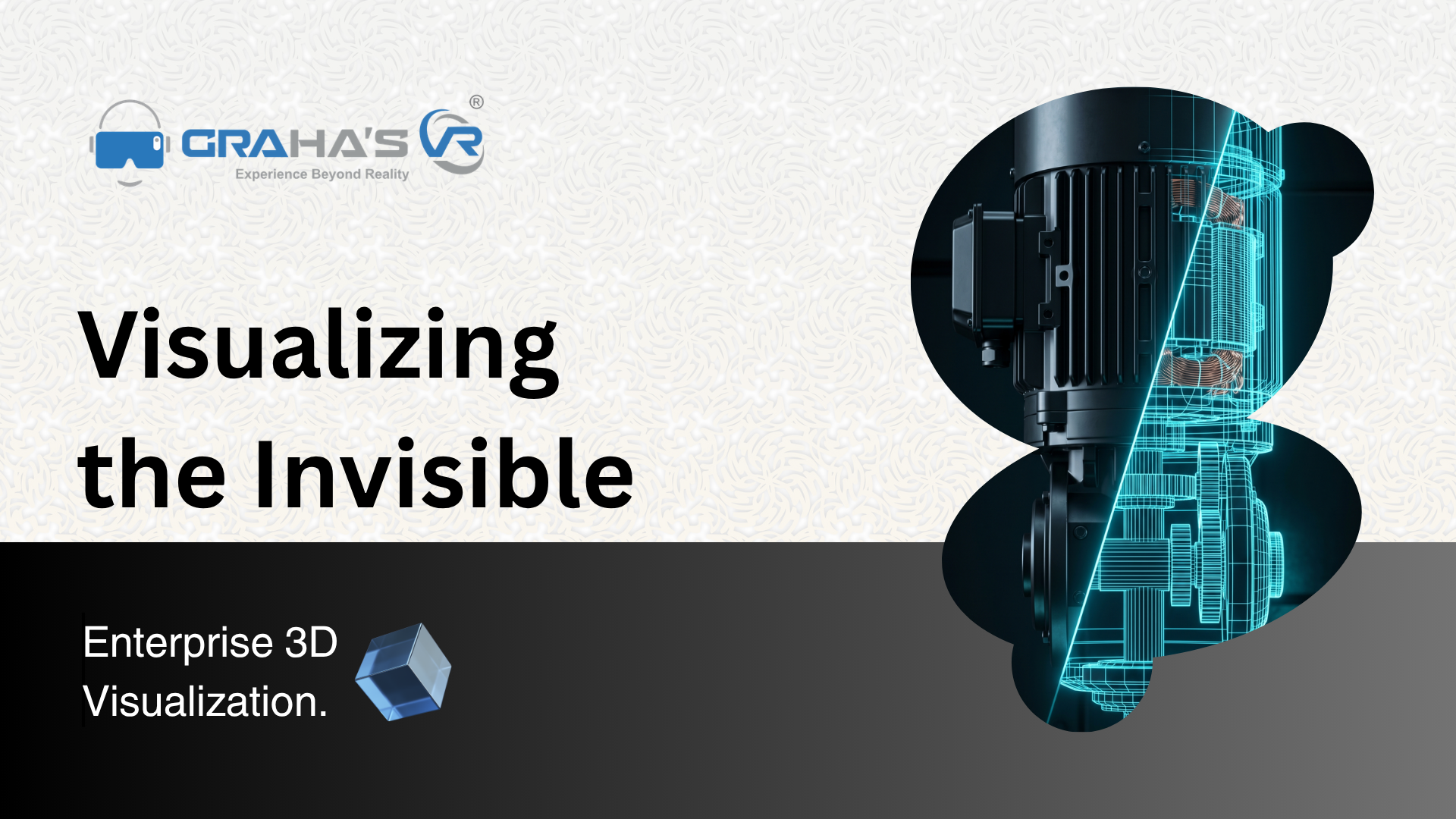
Enterprise 3D Visualization:
Solving Micro-Mechanical Defects
How a Global Automotive Manufacturing Conglomerate transformed cross-border engineering communication, visualizing the invisible with GRAHAs VR.
The High Cost of 2D Miscommunication
For global manufacturing conglomerates, operational downtime isn't measured in inconvenience; it is measured in hundreds of thousands of dollars per hour. Yet, when a systemic production issue arises, the biggest bottleneck to resolving it isn't the engineering itself—it is the communication.
This is what we define as the "Cognitive Gap." When technical teams attempt to explain highly complex, micro-millimeter physics to an international board of directors using static 2D PDFs, translation barriers, and PowerPoint slides, they force executives to mentally reconstruct 3D problems. This friction leads to prolonged downtimes, endless email chains, and delayed consensus on critical engineering fixes.
The Problem: A 1.4mm Hidden Failure
A leading International Automotive Manufacturing Conglomerate faced this exact friction with a critical BLDC motor assembly. A seemingly invisible, 1.4mm gap was causing an internal magnet to raise during operation, driven by retainer deformation and insufficient L-Guide block height.
Because this defect was buried deep inside the assembled housing, standard photography and 2D engineering blueprints completely failed to convey the spatial reality of the failure point. The global stakeholders needed to approve a tooling change, but the traditional 2D mediums could not effectively illustrate why the 1.4mm gap was fatal to the motor's lifecycle.
The Intervention: Visualizing the Invisible
To bridge this communication gap, GRAHAs VR deployed Enterprise 3D Visualization. Instead of presenting a 50-page technical document, we utilized the core principles of our published STEP Framework—specifically focusing on 'P' (Place & Contextual Learning).
We developed a high-fidelity, spatial 3D animation output that digitally stripped away the exterior machinery to isolate the exact point of failure. In a fully visualized 3D space, the global teams could watch the physics of the defect occur in real-time, instantly experiencing the spatial context. This was followed immediately by the visual implementation of the solution: extending the L-Guide block by 1.2mm to physically secure the magnet.
Interact with a BLDC Motor Anatomy
Use your mouse or touch screen to rotate, zoom, and inspect the internal structure. Mobile users: Tap the AR icon in the corner to project this model into your space.
Disclaimer: To protect client confidentiality and proprietary NDA restrictions, the interactive 3D model embedded above is a generic representation of a motor anatomy. It is provided strictly to demonstrate the capabilities of spatial viewing and does not represent the specific automotive components utilized in this case study.
The Result: Speed to Consensus
The impact of transitioning from 2D slides to Enterprise XR visualization was profound. What traditionally required a 3-week approval cycle of cross-border email chains, translation bottlenecks, and frustrated Zoom calls was reduced to a 45-minute spatial walkthrough.
Spatial Computing is no longer a future concept—it is already disrupting the enterprise landscape. By allowing executives to see complex engineering physics exactly as they occur in reality, GRAHAs VR eliminated the cognitive gap, driving instant global alignment and proving that XR is the ultimate universal language for modern enterprise operations.
Join Our Growing Community
Subscribe alongside other spatial enthusiasts to receive exclusive breakdowns on WebAR, Digital Twins, and the STEP Framework.
Book a Spatial Strategy Call
Discuss Custom XR Solutions, Zeal X deployments, or how to visualize your engineering bottlenecks.
Request Received
Thank you! Our engineering team will contact you shortly to schedule your strategy call.